MANIFEST0
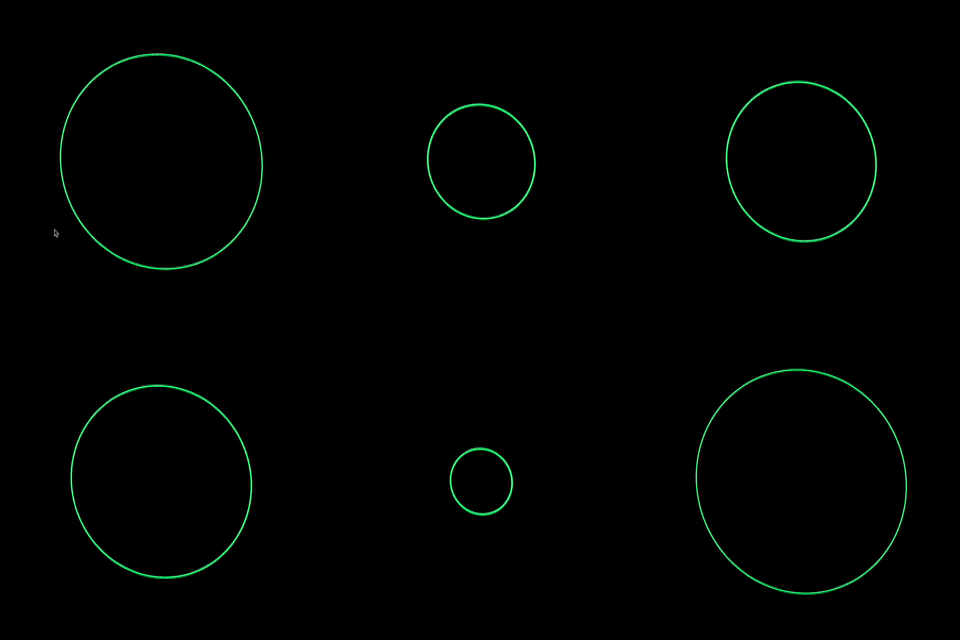
Wave Creatures is a project aiming to connect two dimensions through a device called oscilloscope.
It is an experiment. And it has been my main focus for 2+ years.
It is an artistic research started during my Master studies at the Royal Conservatoire of The Hague.
It is cross-modal art, unifying sound and vision with a one-to-one relationship without compromises.
It is a vision of an immersive multi-sensory experience.
It is authentic. No tricks, no 3D modeling. Just raw signal transcending our perceptions.
For the first time, an acoustic ensemble interacts live with an oscilloscope. Music and visuals merge in real time.
Wave Creatures is an escape plan. A way out the prison of our limited and fragmented senses.
The~idea
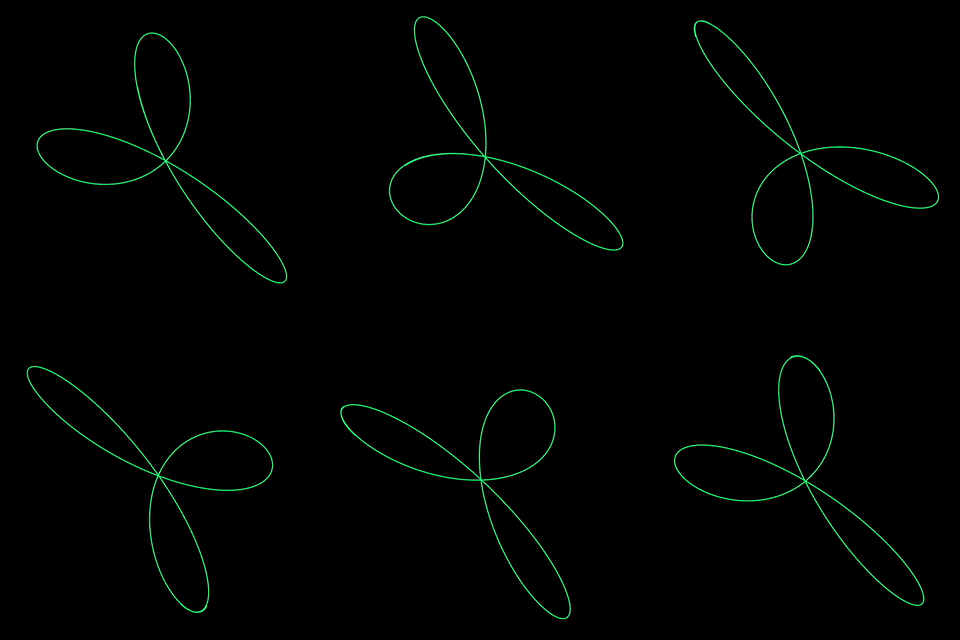
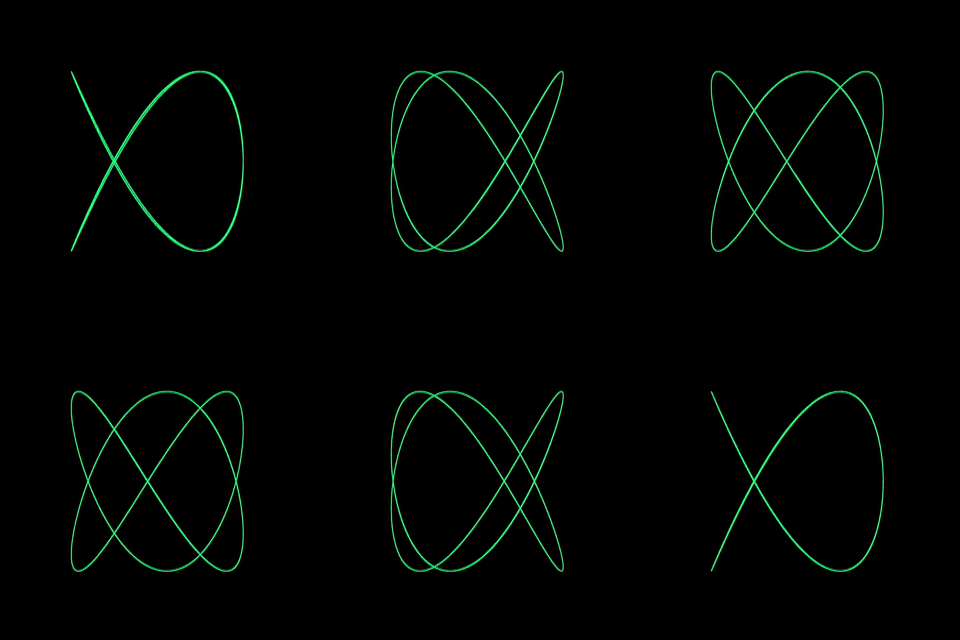
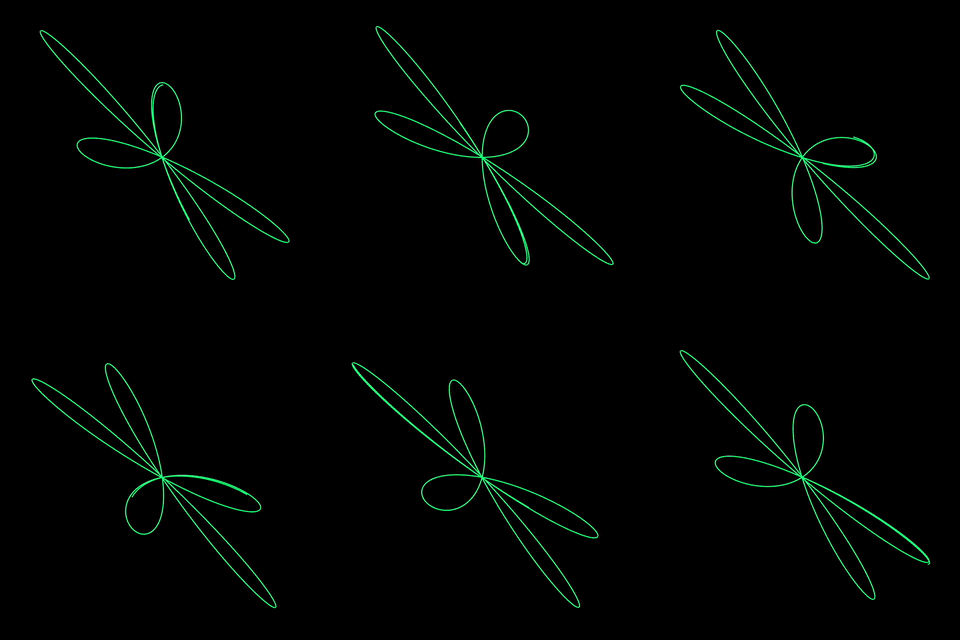
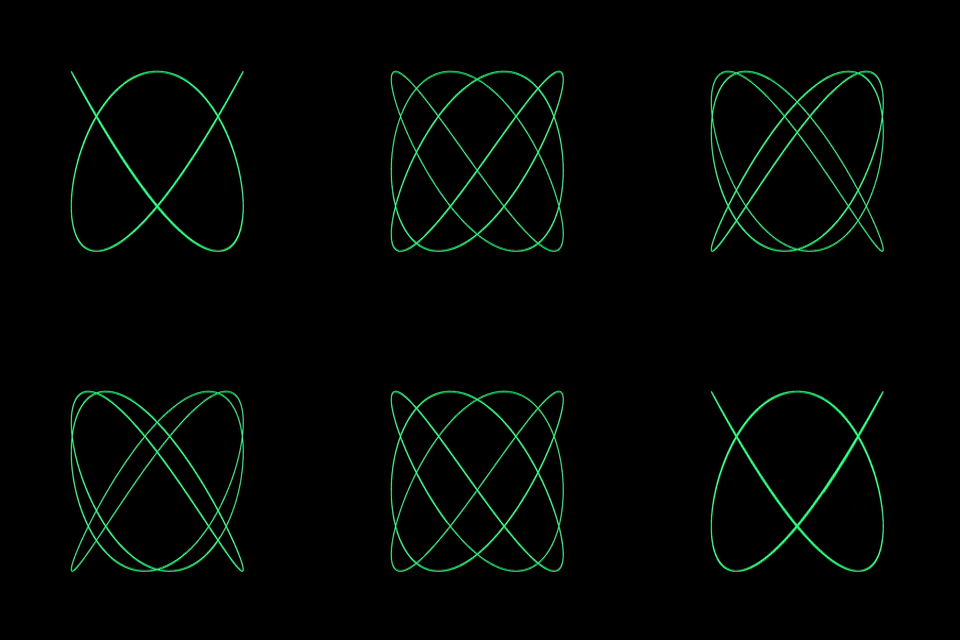
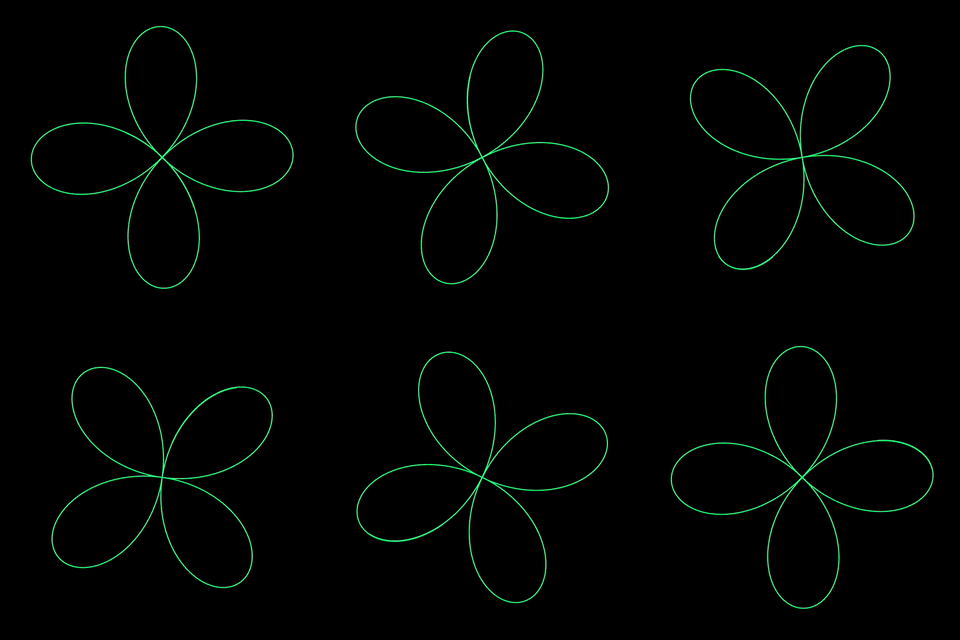
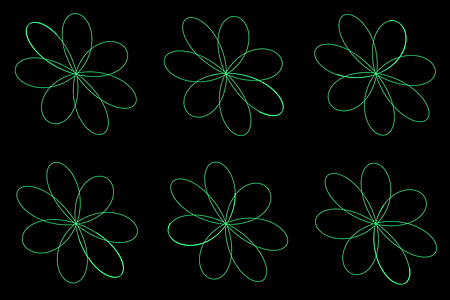
We’re familiar with representing sound visually, perhaps most commonly through the oscillating line on an electrocardiogram (ECG). Niccolò’s research builds upon this foundation but takes a radical leap. Instead of merely visualizing sound along a single axis (time), his work employs a different technique to use sound itself as the primary control signal for multiple spatial dimensions. This effectively transforms sound from a temporal line into a sculpting tool capable of drawing three-dimensional figures in real-time – creating literal, light-based sculptures that evolve as the sound plays. This concept is already established as Oscilloscope Music.
The true innovation, however, lies in the source of the sound. While precise, geometric patterns can indeed be generated using artificial electronic tones, the project’s greatest magic is achieved by utilising the raw sounds of acoustic instruments. Listen to the breathy sigh of a flute, the resonant hum of a cello string, the nuanced inflections of the human voice. These organic, acoustic sounds, when analysed, don’t produce perfect, predictable shapes. Instead, they generate complex, living, “imperfect”, and inherently unique visual forms – much like the sounds themselves.
This unique interaction reveals the physical manifestation of sound in a tangible, analogue and more truthful way. It is this process – turning the nuances of acoustic performance into unique visual sculptures – that forms the heart of the project. Consequently, the composition itself is conceived specifically for this visual output. The musical score isn’t just a guide for hearing; it is also a blueprint for generating a live, evolving visual choreography, seen as the music is performed.

The~research
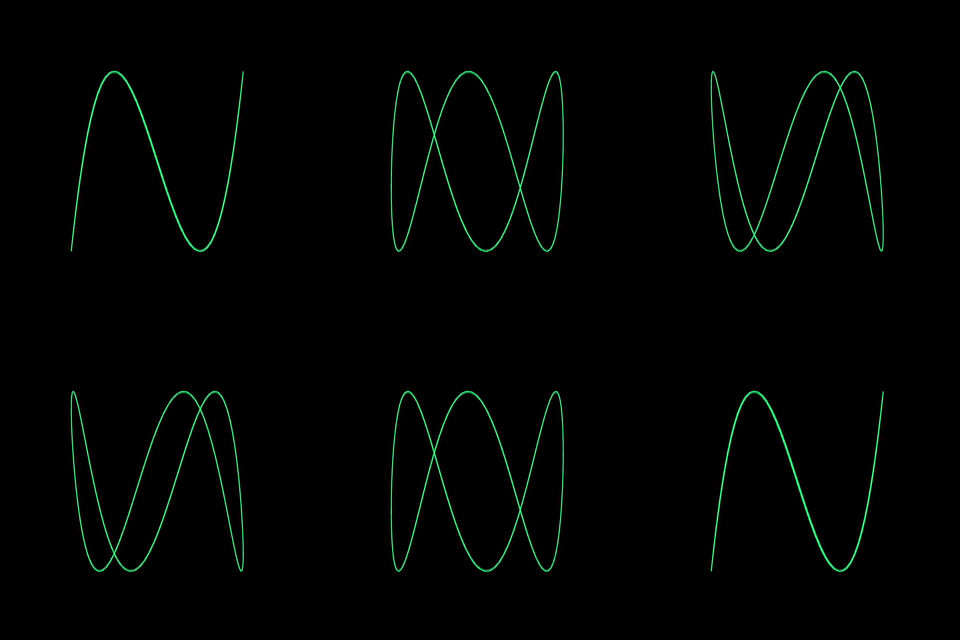
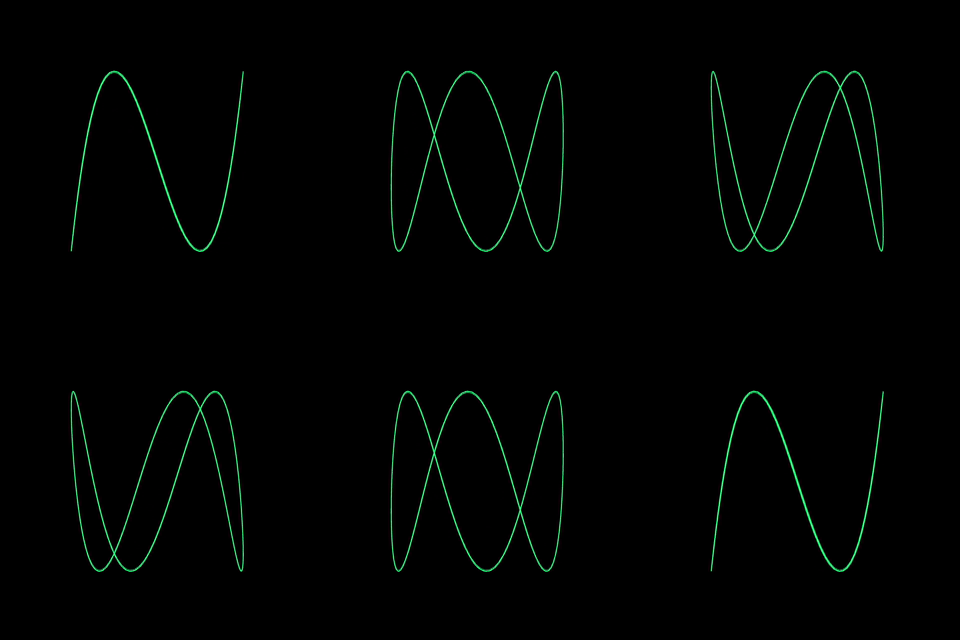
I have spent the last two years at the intersection of sound and vision through the innovative use of the oscilloscope in musical composition and performance. Originally a tool for scientific and industrial applications, the oscilloscope’s ability to transform electrical signals into dynamic visual patterns offers a unique opportunity for audio-visual expression. This study is motivated by a fascination with the device’s aesthetic and philosophical potential, as well as its capacity to bridge sound and image, creating a multi-sensory artistic experience. The central research questions guiding this investigation are: How can the oscilloscope be incorporated into compositional practice? Can it function as both a compositional tool and a live performance instrument? Is integration with acoustic instruments feasible, and how does it operate within an ensemble context? The findings highlight the oscilloscope’s potential to redefine traditional musical practices, offering new dimensions of creativity and interaction, bringing unexplored possibilities along with strict limits and challenges. This project contributes to the growing field of multimedia art, providing insights for composers and performers interested in exploring the translation of sound to image, and technology.
My research has been published in July 2025 and it’s available online at researchcatalogue.net.
Thanks to the De Zaaier Foundation for awarding my research project with a grant in May 2024
Performances
- 12 June 2025, Amare (Conservatoriumzaal), Den Haag (NL) – Debut Concert
- 03 December 2025, Tivoli Vredenburg (Hertz hall), Utrecht (NL) – No Man’s Land (concert + workshop)
[generously supported by PodiumKunst.net]